This was an good exploration into the concepts of space and understanding how to invoke emotion. I began this project with essentially a site with three objects, each doing a different job directing the reader's attention and emotion. I scrapped this idea after a material shortage and space shortage. The next idea was a large box with an opening in the roof at the end opposite the reader. This point of desire was strengthened by the juxtaposition of the light corner with its adjacent one. The shape of the structure helped to focus the reader on his desire. I forfeited this idea after it didn't meet diagonal restrictions and was too "boxy."
The idea I eventually went with uses almost every design idea to wrap the reader and force him to feel weak, small, and helpless. The heavy element is used to compress the area around the focal point and other planes to make them seem fragile. The side elements guide the gaze with out distracting. The entire structure is axial and balanced to also help focus. The stairs have a rise and run that makes the reader sit in a fetal position.
I suppose that my biggest downfall in this project was my use of light to create a focal point. I achieved the desired shape I wanted on the wall, but only at one time of day. I misunderstood my control over lighting to be total, as I would choose the exact time this poem would be read and this would only happen once. One point that confused me some was that I was unsure whether the reader would experience the entire structure, or just the point they were to read from. I would like to record more of my thoughts on the next project to sort out these kinds of issues as I create my structure.
Friday, February 6, 2009


 Rough diagrams of basic location ideas, lighting strengths, circulation patterns, site orientation, beginning floor plans, heavy element placement, roof angle, and intention of symmetry. Also included is a photo of my first diagram, which was more about how and less about why.


Photos of the final model. The hole in the roof allows the light to be reflected onto the back wall, creating a point of desire. The side elements, symmetry, tilted roof, and entrance locations all direct the attention of the reader towards the focal point.
Wednesday, January 28, 2009
Models


The first examples are of my last model. It is without the largest plane, which would be the back, for a view of the inside. A ramp leads below the ground plain to one of two paths, both leading to the reading room. There, the reader sits on a raised area and reads to a big open room, as the roof slants away from him. There is a hole in the roof to allow a small source of light in on the opposite wall to serve as a center of focus.
The next four are of my first idea. The room is narrow at the entrance and expands back, and up, to the rear face. In the far corner from the entrance is a hole in the ceilings, casting light into the corner, drawing the reader to it. But there is a fence between his lit reading platform and the light, so he can never have it. In the light, he feels vulnerable and alone. The juxtaposition between the far corners makes for a strong pull towards the light and the fences is angled to further this effect.
The last four are of my second idea. The reader is either atop the platform, or sheltered by it. There is a path to the focal point of the object atop the thin plane, sitting frailly in the distance. A wall impedes access to the pedestal, and the reader can only look on at the wonder the cast such a large shadow over his emotions and hope for it be one day be in his grasp.
 Scanned upside down, This is a rendition for the profile of my third model. The area is dropped below ground with stairs or a ramp coming around the front. inside, there is an elevated reading area adjacent to the largest wall and an open room where light is cast on the wall in front as a small stimuli.
 Beginning drawings of the third model.
Upside down again. A partial of the second model, in which there are three separate structures. One is to house the reader, one is a block walkway leading to the third, which is a tall, freestanding structure as a focal point for the reader. Aerial and side view of second model also continued in next section.

 Toying with the concept in the second model. Maybe making the site tilted to place the focus at a more unreachable point.
 Original idea: an expanding room with a reading area in the middle, a beam of light from above to light the reader. Then a strong juxtaposition of light and dark on the far wall. Light from one corner will illuminate the wall creating an area of curiosity, but a fencelike structure between the reader and the light prevents him from ever attaining its direct presence. The entrance is in the rear, so as not to contaminate the lighting on the adjacent wall.
 Notes.


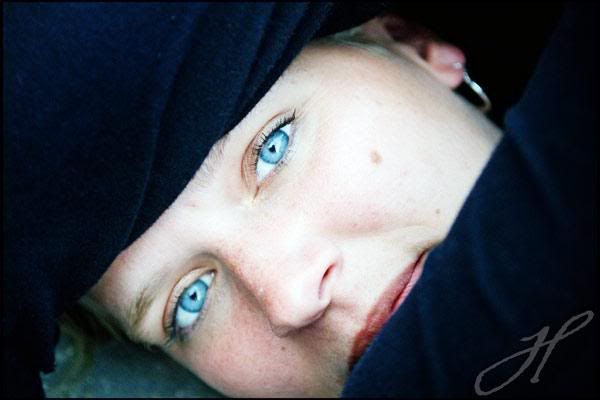


Somewhere i have never traveled
Why: I am choosing this poem because it is strong and has some emotional significance to me. There is very descriptive language that will translate well into spatial form. Phrases such as "silence" "enclose me" and "fragility" can start to illustrate a structure that would emphasize the emotions a reader would feel when he/she was experiencing the work. Since I am emotionally connected to this poem, I can very easily put myself into the scenario I am trying to produce, and visualize it throughout stages of development.
Interpretation: EE Cummings is clearly in love, or creating a person that is. it is unrequited love and one that has a strong bind on his emotions. One little look scares him into hiding. The thing he wants so badly, the thing that he has never experienced he does not understand. He knows not why he feels this way, but only that the desire is taking him over, as small stimuli invoke strong responses internally. He lives on the hope that one day this guy/girl will look his way, and perhaps want to be near to him.
The Road Not Taken
Why: This poem also contains much imagery that I feel could be translated into the three spatial dimensions. The poem clearly describes the paths. The writer uses many articulations of tones and imagery. As O read this poem, I become overwhelmed with feelings of vindication and relief. The words are powerful innately, so transferring that power into a structure would be straightforward.
Interpretation: I interpret this poem as Frost reminiscing on a decision he made in his life: one that he stewed over for some time before deciding. He chose the path that few others follow and he is thankful he did. But he is wasting time looking beck on the decision he made, as there is no way to either change it, or see what the other road would have given him. He is missing the path that is all around him.
Saturday, January 24, 2009


Subscribe to:
Comments (Atom)